English| EUR
Suggested for you
More currencies
Choose a language
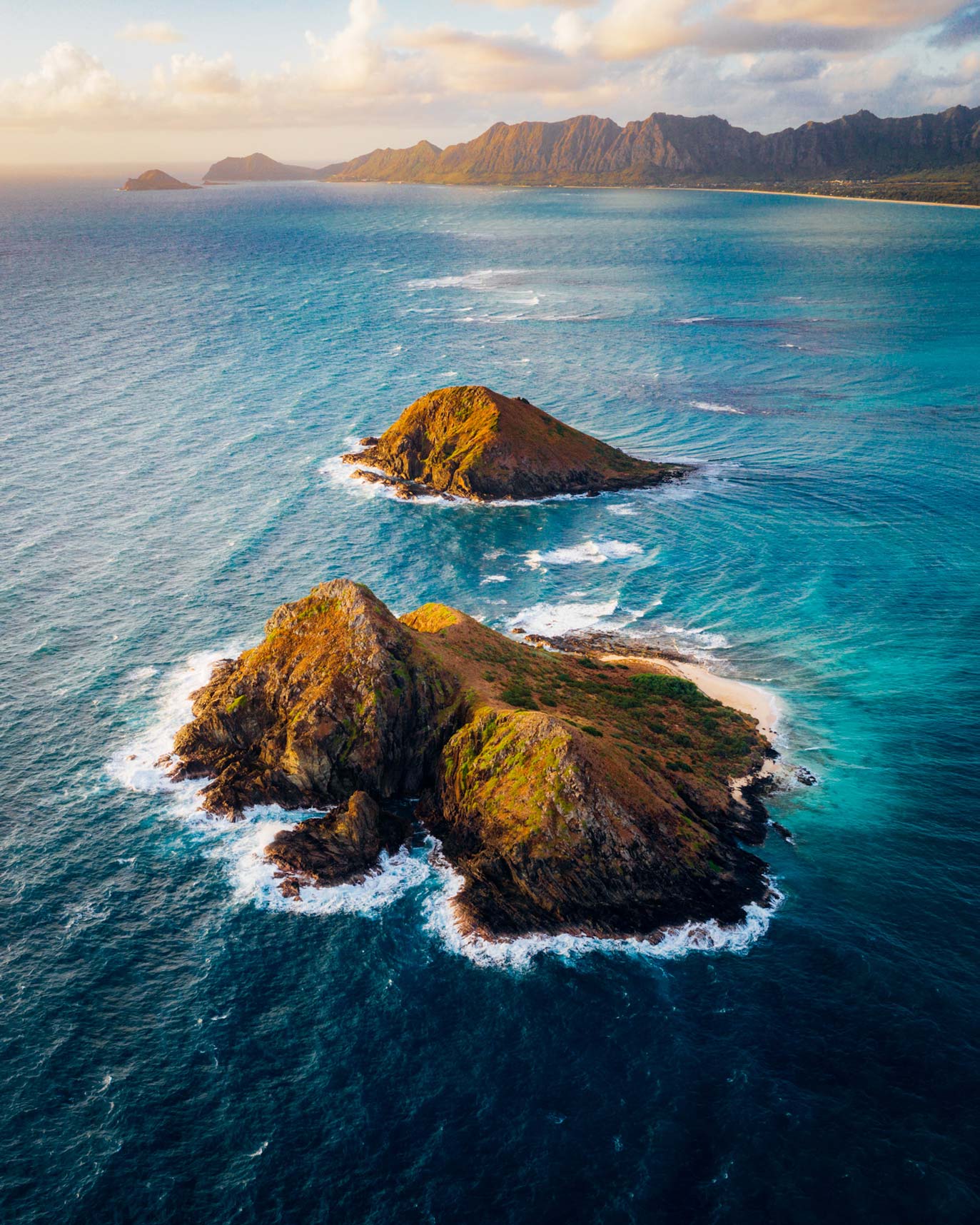
Landing on Moku Nui, the larger of the two Mokulua Islands, requires state authorization and advance planning. This guide covers the permit regulations enforced by Hawaii's Division of Forestry and Wildlife, what the landing fee includes, and how to meet safety and conservation protocols before paddling out from Kailua Beach.
Quick answer
A state-issued mokulua islands permit is mandatory for landing on Moku Nui, charged at 3 USD per person per day. The permit applies to all visitors intending to step ashore, protects the seabird sanctuary from overuse, and must be secured through the Hawaii Department of Land and Natural Resources reservation system. The islands are closed to landing on Sundays, and permit holders remain subject to ocean conditions and wildlife disturbance prohibitions.
Moku Nui sits three-quarters of a mile offshore from Kailua Beach, home to nesting populations of wedge-tailed shearwaters and Laysan albatross that depend on strict human access controls. The Hawaii Division of Forestry and Wildlife instituted the mokulua islands permit system in 2023 to cap daily landings and enforce protective buffer zones around active nest sites. Without authorized access documentation, visitors who paddle out may legally circle the island but cannot set foot on the sand or rocky shelves that ring the shoreline. The permit framework distinguishes between transit through state waters and physical contact with the island itself. Kayakers, stand-up paddleboarders, and outrigger canoe crews traveling the channel from Lanikai do not require authorization unless they intend to beach their craft or disembark. Once ashore, permit holders must confine activity to designated areas below the vegetation line, keep noise to conversational levels, and avoid approach within ten meters of any seabird burrow or chick. The state coordinates permit issuance with real-time nesting surveys conducted between March and September, when access restrictions tighten and certain landing zones close entirely. Reservation requests open ninety days before the desired visit date, processed on a first-come basis through the official state portal. Peak demand falls between May and August, when trade winds moderate and dawn launch windows stretch past seven. The system does not assign time slots but enforces a daily visitor cap, meaning sold-out dates require rescheduling or joining a commercially guided group that secures block allocations months ahead. Authorization documents must accompany every paddler throughout the crossing and remain available for inspection by enforcement officers patrolling the sanctuary perimeter. Permit compliance ties directly to offshore safety standards and self-rescue capability. The state mandates personal flotation devices, leash tethers for all watercraft, and weather literacy sufficient to assess wind shear and swell period before committing to the exposed channel. Rescues triggered by underprepared landings strain county resources and frequently result in citation, suspension of future permit eligibility, or referral to marine patrol. The Mokulua sanctuary remains one of fewer than a dozen state seabird reserves where landing authorization still permits civilian access outside research seasons, a privilege contingent on documented low-impact behavior and adherence to the conservation conditions embedded in every approved request.
“The permit framework distinguishes between transit through state waters and physical contact with the island itself.”
Securing your Mokulua Islands landing permit requires completing an online reservation through the Hawaii Department of Land and Natural Resources portal. The entire process takes approximately 10–15 minutes and must be completed before your kayak departure.
Navigate to dofaw.ehawaii.gov and register using a valid email address. Many visitors skip the email verification step—check your spam folder and confirm your account before proceeding to booking.
Within the portal, choose "Day Use Permits" and locate the Mokulua Islands option under Oahu reserves. The system lists multiple island sites—ensure you select Moku Nui specifically, as other locations require different permits.
Pick your intended kayak date from the availability calendar, noting that Sundays are closed. Permits release 30 days in advance and popular weekend slots fill quickly, often within 48 hours of opening.
Input the exact number of people landing on the island, with each person requiring their own permit allocation. The system will calculate the total based on the per-person fee listed in your booking confirmation.
Submit payment via credit card and immediately download the PDF confirmation. Print a physical copy or save it offline to your phone—cell service at Kailua Beach is unreliable and rangers may request proof of permit before launch.
Bring your printed or saved permit to Kailua Beach when you depart. State enforcement officers conduct random checks at the beach and on Moku Nui itself, and launching without a valid permit risks citation and removal from the island.
The best arrival window for the Mokulua Islands is 07:00–10:00 to avoid mid-day winds, strong currents, and peak visitor crowding. Securing an early permit slot ensures safer transit conditions and better adherence to occupancy guidelines.
—
Fewer visitors provide a quieter experience and more flexibility for landing.
Trade winds increase, 75–85°F
Afternoons often bring choppy water; morning arrivals remain essential.
Cooler, 65–75°F
Expect higher surf and potential permit cancellations due to rough ocean conditions.
Mild, 70–80°F
These months offer the most stable weather and manageable crowd levels.
Verdict: The optimal time to visit is during the shoulder months of April or October, arriving between 07:00–10:00 on a weekday.
The Mokulua Islands landing permit system operates on a set weekly schedule to manage island access. Please review the operating hours below to plan your arrival.
Your permit grants landing rights on Moku Nui only—state wildlife regulations protect the seabird colonies and fragile dune ecosystems from disturbance. Follow all restrictions to avoid fines and help preserve the islands for future visitors.
Everything you need to know about mokulua islands permit
Yes, a state landing permit is required for all visitors who plan to go ashore on Moku Nui. This regulation helps protect the delicate ecosystem and seabird nesting grounds found on the island.
The current fee for a landing permit is 3 USD per person per day. Please ensure you have this documentation ready when planning your trip to the Kailua coastline.
You can obtain your permit through the official state portal at https://dofaw.ehawaii.gov. This site serves as the primary resource for managing access to these protected landmarks.
No, landing on the island is restricted to those who have secured the necessary authorization. Kayaking in the surrounding waters is generally permitted, but stepping onto the shore without a valid permit is prohibited.
Visitors must remain on marked paths and refrain from disturbing wildlife or vegetation. Failure to adhere to the guidelines set forth by your mokulua islands permit may result in fines or future access restrictions.
To avoid strong currents and heavy visitor traffic, the best arrival window is between 07:00 and 10:00. This timing also helps you navigate the coastal conditions more effectively before mid-day winds pick up.
Yes, all individuals, regardless of age, must be included in the permit process. Please verify your group size and registration details on the official site before departing from the shore.