English| EUR
Suggested for you
More currencies
Choose a language
The twin seabird sanctuaries rise a mile offshore from Lanikai Beach, and the open-water crossing is the defining stretch of every Mokulua kayak trip. Your paddling time depends on conditions you can prepare for and a few you can't. This guide breaks down the crossing, the variables that shape it, and how to set realistic expectations for your day on the water.
Quick answer
Most paddlers reach Moku Nui, the closer and larger of the two islands, in 45 to 60 minutes from Lanikai Beach. The crossing covers roughly one mile of open ocean. Your actual time depends on wind strength, current direction, paddling experience, and whether you're in a single or tandem kayak. Calm morning conditions and a steady cadence can bring that figure closer to 40 minutes, while afternoon trade winds or headcurrents may push it past an hour.
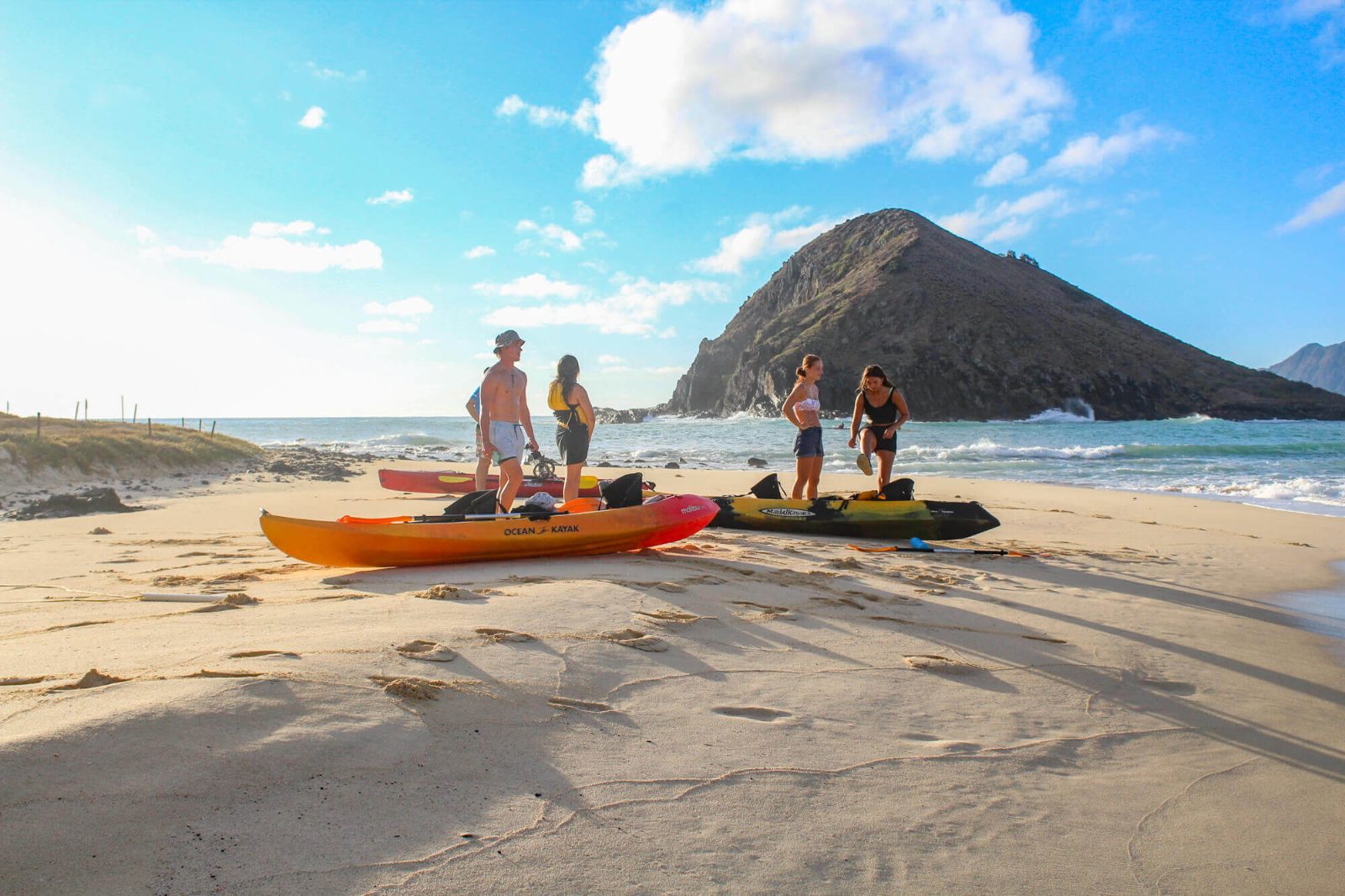
The Mokulua Islands sit 4,800 feet offshore—close enough to see from the sand, far enough that the paddle feels earned. The route crosses open ocean, and the water between Lanikai and the twin peaks is never still. Trade winds funnel through the Koolau range and accelerate across Kailua Bay, building chop that peaks in the afternoon. Tidal currents sweep north and south along the coast, and paddlers who launch without checking the flow often find themselves drifting parallel to their target. The crossing is straightforward in principle—aim for the western flank of Moku Nui and keep your bow pointed into the wind—but it demands attention, and how long does it take to kayak to Mokulua Islands becomes a question with no single answer. Fitness and boat type shape the timeline as much as the weather does. A strong paddler in a sleek single kayak can cover the mile in 35 minutes on a glassy morning, while a tandem crew new to ocean paddling may need 70 minutes in moderate wind. The return leg is typically faster—trade winds push southwest in the afternoon, and the current often cooperates—but fatigue accumulates, and the last quarter-mile can feel longer than the first three combined. Guides estimate the round-trip paddle at two to two-and-a-half hours of active movement, not counting time spent ashore on Moku Nui's rocky landing zone. The state requires a three-dollar landing permit per person per day, issued through the Hawaii Division of Forestry and Wildlife portal, and enforcement is active during peak season. The permit system limits crowding but does not regulate launch times, so the narrow beach at the base of Moku Nui can see a dozen kayaks clustered by mid-morning. The seabirds that nest on both islands—wedge-tailed shearwaters, red-footed boobies, and brown noddies—are federally protected, and access to Moku Iki, the smaller eastern island, is prohibited year-round. Rangers patrol by boat between April and September, and citations for unpermitted landings start at 150 dollars. Paddlers who time their crossing for the early window—between seven and ten in the morning—encounter lighter winds, fewer boats, and calmer water along the reef shelf that extends north from Lanikai. The launch zone lies at the southern end of Lanikai Beach, where Mokulua Drive meets the sand, and parking is resident-permit only within a half-mile radius. Most visitors walk from Kailua Beach Park or arrange a drop-off, and the walk adds twenty minutes to the pre-launch timeline.
“The water between Lanikai and the twin peaks is never still, and the crossing is straightforward in principle but demands attention.”
This itinerary suits paddlers comfortable with open-ocean kayaking and covers roughly 3–4 hours round-trip from Lanikai Beach. Times reflect a calm morning launch with an hour exploring Moku Nui.
Paddle out from the sandy shore in calm early-morning conditions. The crossing to Moku Nui is approximately 0.75 miles and takes most paddlers 30–45 minutes each way.
Beach your kayak on the western shore and secure it above the tideline. The landing permit becomes required once you step onto the island.
Walk the sandy interior, spot seabirds nesting in the dunes, and take in views back toward Lanikai. The island is small—most visitors cover it in 20–30 minutes.
Navigate carefully over the rocky outcrop on the windward side to reach this tidal pool. Conditions here depend heavily on swell; skip it if waves are breaking over the rocks.
Push off for the return crossing, keeping an eye on wind that typically picks up after 10:00. Budget another 30–45 minutes to reach shore.
Rinse your gear and pack up. You'll have beaten the midday heat and the afternoon trade winds that make the paddle significantly harder.
The best arrival window is 07:00–10:00 to ensure safer paddling conditions. Starting early allows kayakers to navigate before the stronger afternoon trade winds develop.
Warm with temperatures near 85°F
Higher chance of calm morning waters, though beaches are busier.
Cooler with temperatures near 75°F
Increased chance of larger swells and potentially hazardous wind conditions.
—
Ideal for avoiding weekend congestion and ensuring easier access to the landing area.
Mild temperatures near 80°F
Balanced conditions with fewer crowds than summer and more predictable weather than winter.
Verdict: The optimal time to visit is during shoulder season months on a weekday, arriving within the 07:00–10:00 window.
The Mokulua Islands are located offshore of Lanikai Beach in Kailua, HI. Kayakers typically access the water via the public beach access paths located along Mokulua Drive.
Drive to Kailua via Kalanianaʻole Hwy or Pali Hwy
Walk from public access points on Mokulua Drive to Lanikai Beach
Launch personal kayak from Lanikai Beach shoreline
Parking in the Lanikai neighborhood is extremely limited and strictly enforced, so plan for extra time to transport equipment from your vehicle to the beach. Arrive early to secure a legal parking spot before offloading your kayak.
Moku Nui is part of a state seabird sanctuary with strict rules to protect nesting habitat. Landing requires a permit, and designated zones must be respected to avoid fines and ecological damage.
Everything you need to know about how long does it take to kayak to mokulua islands
Typically, the paddle from Lanikai Beach takes about 30 to 45 minutes each way, though weather conditions can extend this up to 1.5 hours. Understanding how long does it take to kayak to mokulua islands is key to planning a safe, enjoyable morning on the water.
Yes, you must have a landing permit to step onto Moku Nui, the larger island. This 3 USD per person, per day permit is required for all visitors and is often bundled with professional kayak rentals.
The best arrival window is between 07:00 and 10:00. Arriving early helps you navigate calmer morning winds and tides while avoiding the heat and afternoon crowds.
While many visitors make the trip, it is an open-ocean journey that requires moderate physical fitness and basic swimming ability. Since you may wonder how long does it take to kayak to mokulua islands, ensure you check current wind and wave forecasts before you depart.
Be prepared for a workout, as paddling in the open ocean is more challenging than flat water. Because the length of your trip—or how long does it take to kayak to mokulua islands—depends on your fitness and the daily marine conditions, always prioritize safety and bring plenty of water.
Both islands are state-managed seabird sanctuaries, meaning the interior areas are off-limits to visitors. Landing is permitted only on the beach of Moku Nui, and all visitors must pack out their trash to protect the local habitat.